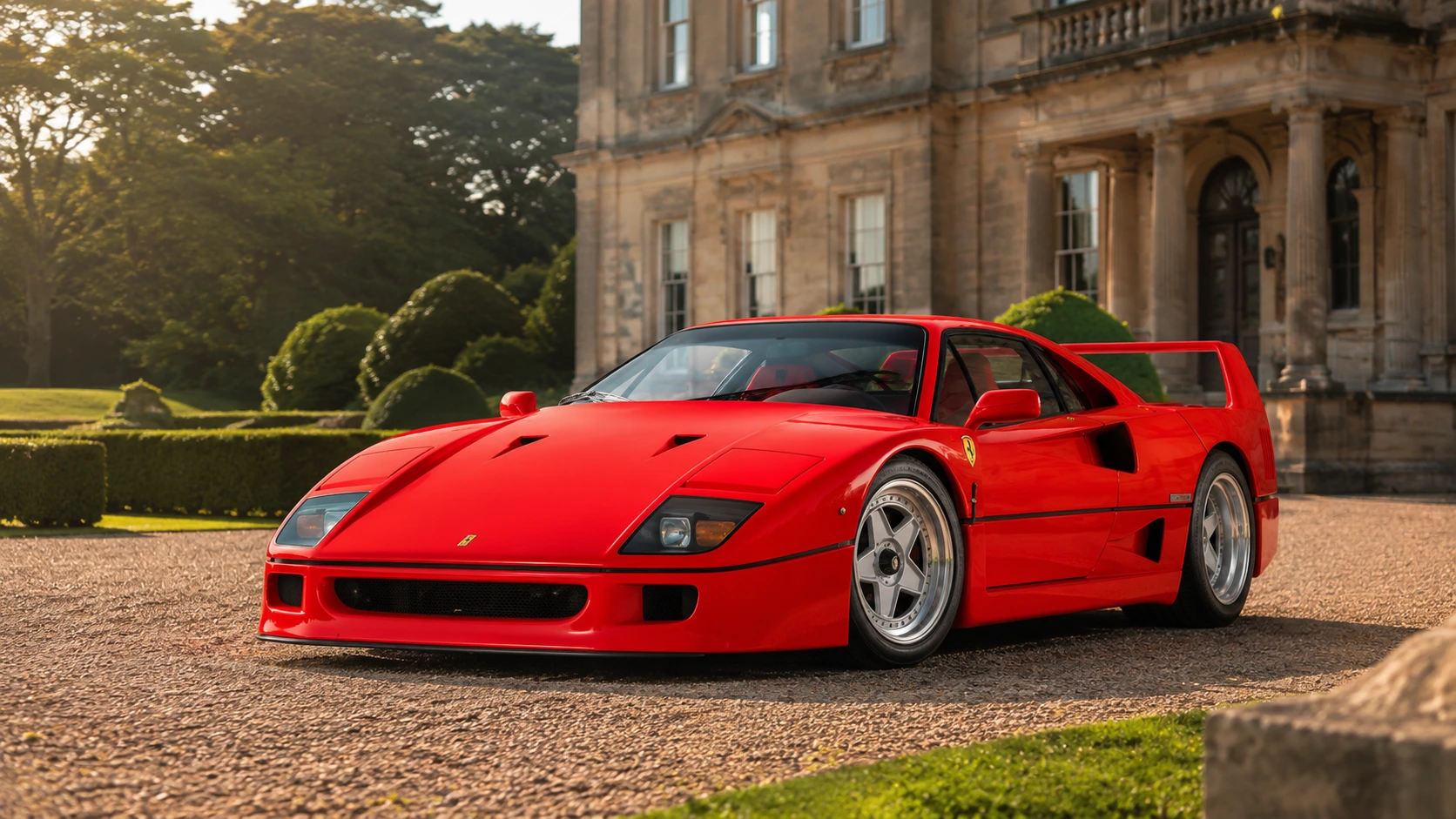
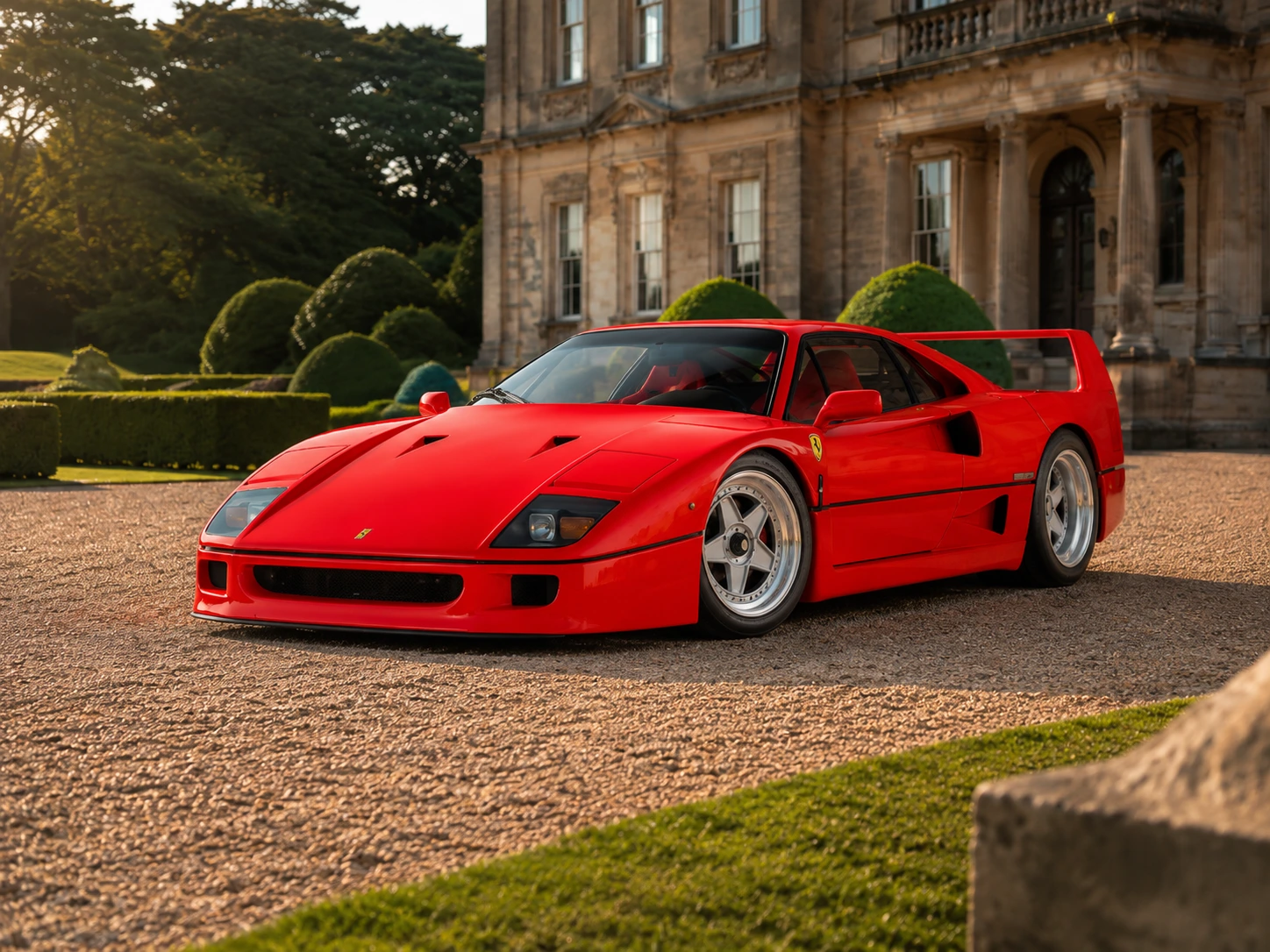
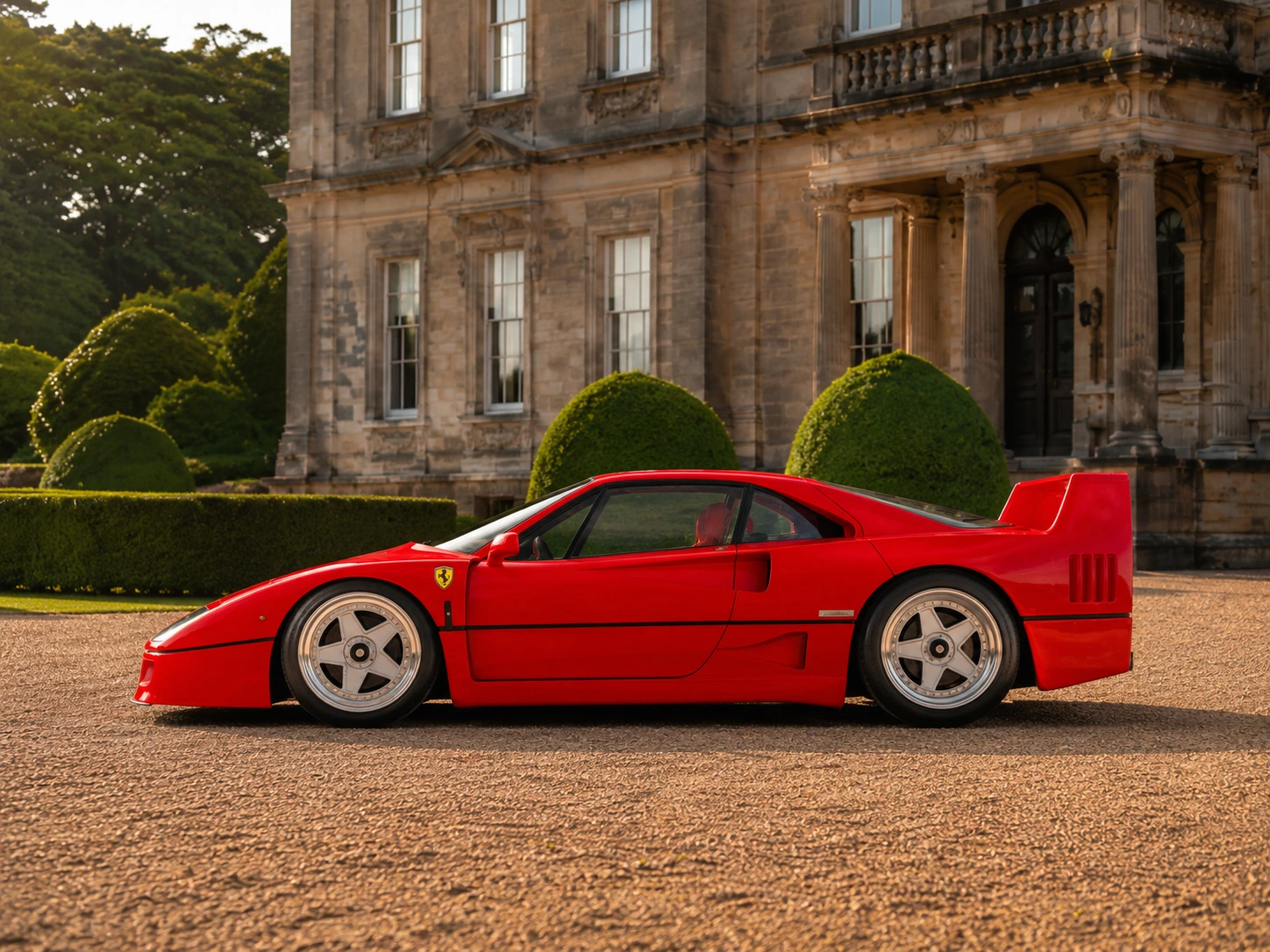
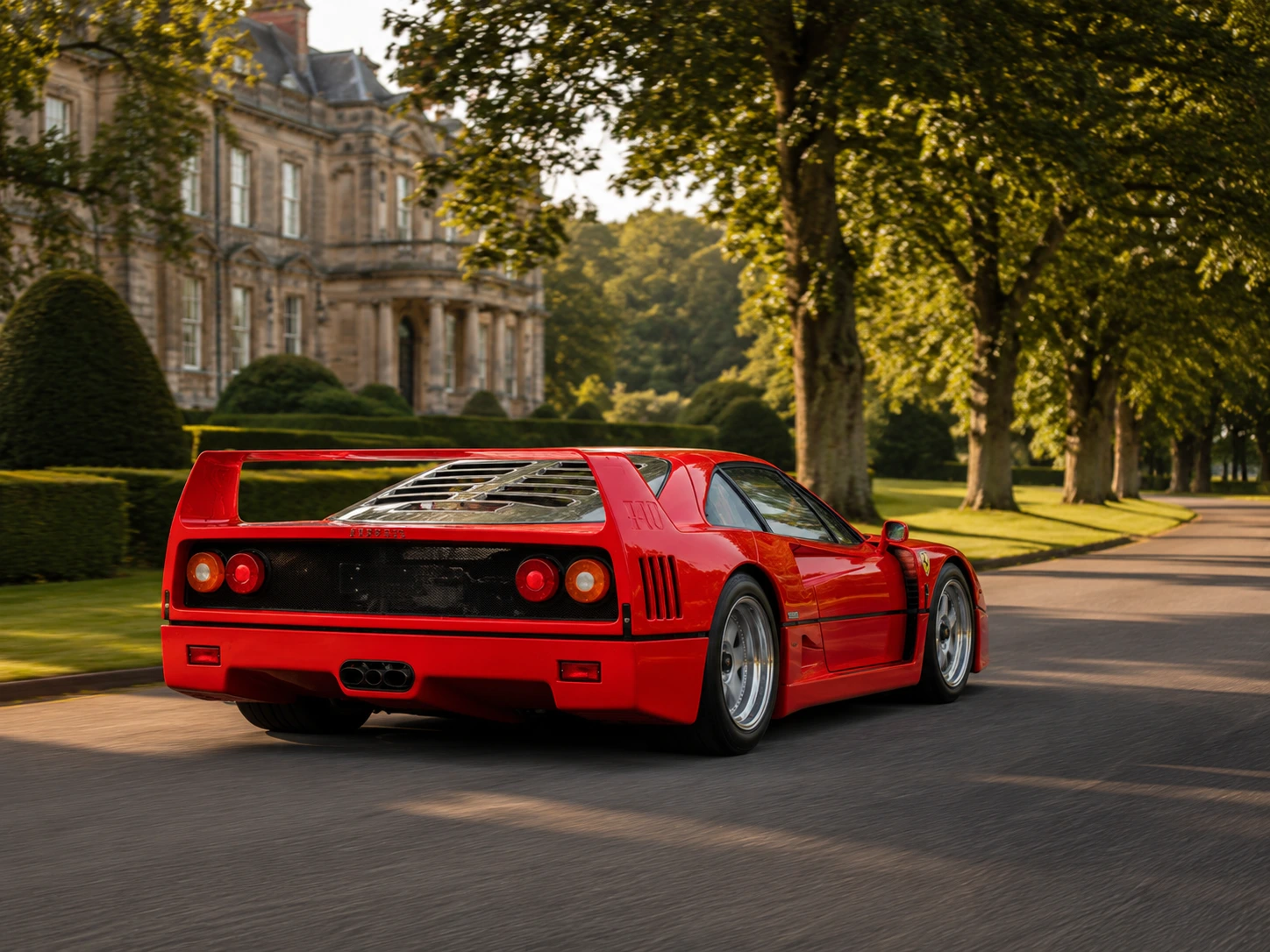
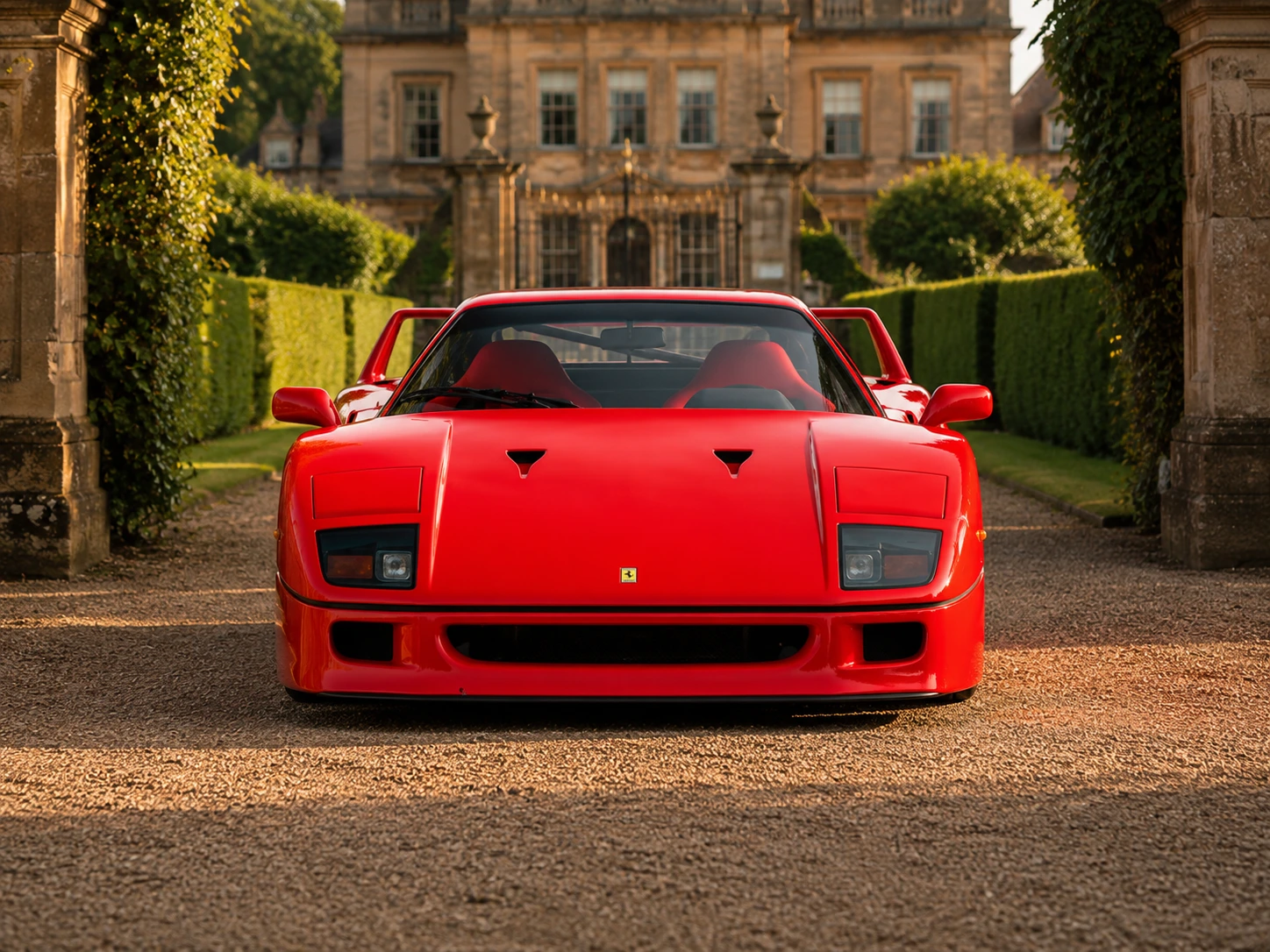
A 40th-anniversary Ferrari built with very little between the driver and the machinery: a twin-turbo V8, five-speed manual gearbox, composite bodywork and performance that pushed a production road car beyond the 200 mph threshold.
The F40 was created for Ferrari's 40th anniversary and arrived in 1987 as an uncompromising two-seat berlinetta. Its visual drama was functional: openings, ducts, the high rear wing and broad body all served cooling or aerodynamic work.
Ferrari's own technical archive describes a rear-longitudinal 90-degree V8 of 2,936.25 cc, fed by Weber-Marelli electronic injection and twin turbochargers. It produced 478 hp at 7,000 rpm and 577 Nm at 4,000 rpm. The company quoted 0–100 km/h in 4.1 seconds and a top speed of 324 km/h.
The museum value of the F40 is in the joining of disciplines. Kevlar panels were bonded to a tubular steel space-frame, while major opening panels used carbon fibre. Inside, luxury was stripped away. The car therefore makes a useful bridge between Ferrari's competition culture, 1980s materials engineering, turbocharged road cars and the modern lineage of Ferrari halo models.